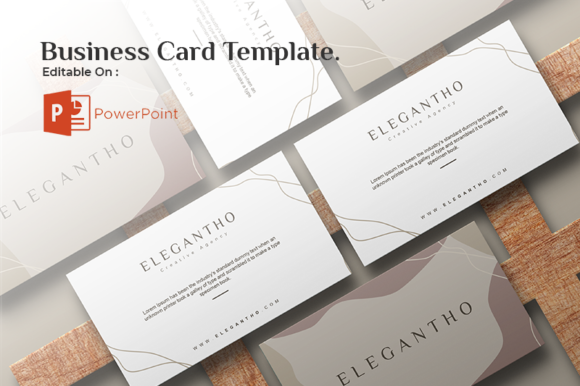
Master Your Brand with a Business Card Powerpoint Template
In a digital world saturated with emails and social media notifications, the tactile experience of handing someone a physical business card remains a powerful gesture. It signals professionalism, preparation, and a tangible connection. However, for many entrepreneurs, freelancers, and small business owners, the barrier to creating a high-quality card often lies in the cost of professional design software or the steep learning curve associated with it. This is where a Business Card Powerpoint Template becomes an invaluable asset. It bridges the gap between amateur DIY efforts and polished, agency-level design, allowing you to take full control of your brand identity without needing a degree in graphic design.
At its core, this type of template is more than just a pre-made layout; it is a structured foundation for creativity. Unlike rigid online builders that limit your options to a few dropdown menus, a well-organized PowerPoint file offers granular control. You are working with vector shapes, editable text boxes, and resizable graphics that respond to your specific needs. The standard dimensions, typically around 9 x 5.5 cm for compact cards or the traditional 3.5 x 2 inches, are already set up, ensuring that your design fits industry printing standards right out of the box. This eliminates the guesswork regarding bleed lines and safe zones, which are common pitfalls for first-time designers.
Why PowerPoint is a Secret Weapon for Design
Many creatives overlook Microsoft PowerPoint as a design tool, associating it strictly with corporate presentations. Yet, its robust handling of shapes, layers, and typography makes it surprisingly capable for print design. When you utilize a Creative Business Card Template Powerpoint File, you leverage a familiar interface to produce professional results. The ability to drag and drop picture placeholders means you can instantly visualize how your headshot or logo will interact with the background elements.
The true power lies in customizability. A high-quality template uses free web fonts, ensuring that what you see on your screen is exactly what will appear when the file is sent to a printer or shared digitally. There are no missing font errors or expensive licensing fees to worry about. Every element, from the subtle curve of a line to the opacity of a background shape, is easily editable. This flexibility allows you to iterate quickly. You can test five different color schemes in ten minutes, something that might take hours in more complex vector software if you aren't an expert.
Tailoring the Design to Your Professional Identity
The beauty of using a modular template is its adaptability across various industries. A generic card rarely leaves a lasting impression, but a customized one tells a story. Here is how different professionals can interpret and adapt these templates to suit their unique goals:
- Real Estate Agents: Focus on trust and approachability. Use the picture placeholder to feature a high-resolution, friendly headshot. Keep the typography clean and legible, prioritizing the phone number and email address. A minimalist background ensures the contact details stand out immediately.
- Creative Freelancers & Designers: This is your chance to show, not just tell. Use the editable shapes to create a dynamic composition that reflects your artistic style. You might invert the colors for a bold look or use the layers to create a sense of depth. The card itself becomes a sample of your design capability.
- Tech Startups & Developers: Opt for a sleek, modern aesthetic. Utilize geometric shapes included in the template to suggest structure and innovation. Dark modes or monochromatic palettes often work well here. Consider adding a QR code linked to your portfolio or GitHub profile, taking advantage of the resizable graphic elements.
- Educators & Consultants: Clarity and authority are key. Choose a layout that offers ample white space, preventing the card from feeling cluttered. Use strong, serif fonts if the template supports them to convey tradition and expertise. Ensure your title and area of specialization are prominent.
Practical Steps for a Print-Ready Result
Having a great design is only half the battle; ensuring it translates perfectly to print is equally critical. When working with a Business Card Powerpoint Template, organization is your best friend. Because all elements are vector-based or high-resolution compatible, you avoid the pixelation issues common with raster images. However, you must remain mindful of a few technical details to guarantee a crisp final product.
First, respect the boundaries. Even though the template is set to the correct size (e.g., 9 x 5.5 cm), always keep critical text and logos within the "safe zone." This is an imaginary margin inside the edge of the card where nothing important should be placed, protecting your content from being trimmed off during the cutting process. Most well-documented templates include guides for this, but it is worth double-checking.
Second, manage your colors wisely. Screens display colors in RGB (Red, Green, Blue), while printers use CMYK (Cyan, Magenta, Yellow, Key/Black). While PowerPoint operates primarily in RGB, choosing standard, vibrant colors usually translates well. Avoid neon hues that may look dull when printed. If you are sending the file to a professional print shop, ask if they accept PPTX files directly or if they require a PDF export. If exporting to PDF, ensure you select the highest quality settings to maintain the sharpness of your vectors and images.
Maintaining Consistency Across Your Brand
Your business card is rarely an isolated entity; it is part of a larger ecosystem of brand touchpoints. To maximize its effectiveness, the design choices you make in your template should echo across your website, social media headers, and email signatures. This consistency builds recognition and trust. If your card features a specific shade of blue and a rounded sans-serif font, carry those elements into your digital presence.
Using a template helps maintain this consistency because it provides a defined set of rules. Once you have finalized your version of the template—your specific combination of fonts, colors, and logo placement—save it as a master file. Whenever you need to reprint cards or create a variation for a specific event, you return to this master. This prevents "design drift," where small, uncoordinated changes over time dilute your brand identity.
Unlocking Creative Potential
Ultimately, a Creative Business Card Template Powerpoint File is a catalyst for action. It removes the intimidation of the blank canvas and allows you to focus on the message rather than the mechanics of design. Whether you are a hobbyist looking to monetize a passion, a small business owner networking at a local chamber of commerce, or a marketer launching a new campaign, the ability to rapidly prototype and finalize a professional card is empowering.
Do not be afraid to experiment with the layers. Try moving the logo to the back, flipping the orientation, or using the shapes to create a border that frames your information uniquely. The files included in these packages, often accompanied by documentation, are designed to be forgiving. They encourage exploration. By taking the time to customize a template thoughtfully, you invest in a tool that works as hard as you do, opening doors and making introductions that matter. In the end, the goal is not just to have a card, but to have a card that represents the very best of what you offer.