Elevating Digital Interfaces with Isometric 3D Dinner Set Icons
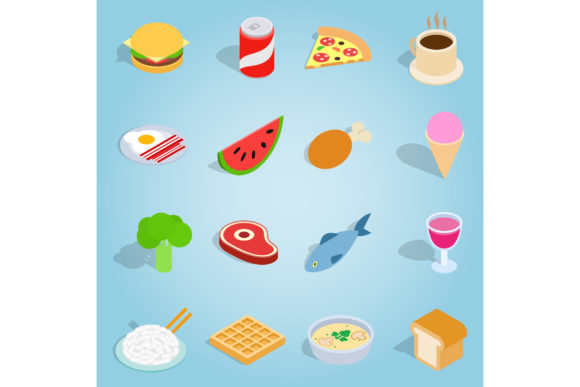
In the rapidly evolving landscape of digital design, the shift from flat, two-dimensional graphics to rich, dimensional visuals has transformed how users interact with web and mobile applications. Among the most versatile tools in this transition are Dinner Set Icons, Isometric 3d Style. These assets represent more than just decorative elements; they serve as functional communication tools that bridge the gap between abstract concepts and tangible user experiences. Whether you are a business owner launching a food delivery platform, a developer building a restaurant management system, or a graphic designer crafting a culinary blog, understanding the utility of an Isometric dinner icons set is essential for creating engaging interfaces.
The Visual Language of Isometric Design
Isometric projection is a method for visually representing three-dimensional objects in two dimensions. Unlike perspective drawing, where parallel lines converge at a vanishing point, isometric drawings maintain parallel lines, giving the image a clean, technical, yet playful appearance. When applied to a universal dinner icons set, this style adds depth and realism without the visual clutter often associated with photorealistic images.
The charm of Dinner Set Icons, Isometric 3d Style lies in their ability to make mundane objects—plates, cutlery, glasses, and serving dishes—feel tactile and inviting. In a mobile UI context, where screen real estate is limited, these icons provide immediate recognition. A user does not need to read a label to understand that a specific button leads to the "Menu" section; the isometric illustration of a stacked plate and fork communicates this instantly. This reduces cognitive load and enhances the overall usability of an application.
Key Characteristics of High-Quality Vector Illustrations
When selecting assets for professional projects, the format and flexibility of the files are paramount. A premium set of basic dinner elements vector illustration typically comes in a variety of formats, including JPG, EPS, AI, PSD, and PNG. Each format serves a distinct purpose in the design workflow:
- AI and EPS: These vector formats are crucial for scalability. Whether the icon is displayed on a small smartwatch face or a large billboard, vector files ensure the edges remain crisp and the colors vibrant. They allow designers to modify colors, strokes, and shapes to match specific brand guidelines.
- PSD: Photoshop files offer layered structures, enabling creators to adjust lighting, shadows, and textures individually. This is particularly useful for creating custom composites or adapting the Isometric 3d Style to fit a dark mode interface.
- PNG: For developers who need ready-to-use assets with transparent backgrounds, PNGs are the standard. High-resolution PNGs derived from the 3D models ensure that the icons look sharp on retina displays.
- JPG: While less common for individual icons due to background limitations, JPGs are useful for previewing the entire set or using in documentation where file size is a concern.
Practical Applications Across Industries
The versatility of Universal dinner icons extends far beyond simple restaurant websites. Their application spans various sectors where food, hospitality, and lifestyle intersect. By integrating an Isometric dinner icons set, creators can inject personality and clarity into diverse projects.
- Food Delivery and Ordering Apps: This is the most obvious use case. Apps like UberEats or DoorDash rely heavily on visual cues to categorize food types. An isometric icon of a burger, a sushi roll, or a coffee cup helps users navigate menus faster. The 3D style makes the food appear more appetizing compared to flat line art.
- Hospitality and Booking Platforms: Hotels and resorts often feature dining options as a key selling point. Using Dinner Set Icons, Isometric 3d Style to represent breakfast buffets, fine dining restaurants, or room service amenities can enhance the booking experience. It gives potential guests a visual taste of the services offered.
- Culinary Education and Recipe Blogs: Content creators focusing on cooking tutorials can use these icons to break down steps or list required equipment. For instance, an icon set featuring different types of pots, pans, and serving ware can be used to create engaging infographics about kitchen essentials.
- Event Planning Software: Platforms that manage weddings, corporate galas, or parties often require modules for catering selection. A comprehensive set of basic dinner elements vector illustration allows planners to visualize table settings, chair arrangements, and menu choices within the software interface.
Enhancing User Experience Through Consistency
One of the primary challenges in UI design is maintaining visual consistency. Mixing different icon styles—such as combining flat icons with skeuomorphic ones—can create a disjointed and unprofessional look. An Isometric dinner icons set solves this by providing a unified visual language. Every element, from the salt shaker to the wine glass, shares the same lighting angle, color palette, and depth proportion.
This consistency builds trust with the user. When an interface feels cohesive, users perceive the underlying product or service as more reliable and polished. Furthermore, the playful nature of the isometric style can soften the tone of a transactional app, making the process of ordering dinner or booking a table feel less like a chore and more like an enjoyable interaction.
Evaluating Suitability for Your Project
While Dinner Set Icons, Isometric 3d Style offers numerous benefits, it is important to evaluate whether this aesthetic aligns with your specific project goals. Not every application benefits from a 3D look. For instance, highly data-dense dashboards or minimalist productivity tools might require simpler, monochromatic icons to avoid visual noise.
However, for consumer-facing applications where engagement and emotion play a significant role, the isometric approach is often superior. When considering the adoption of these icons, ask yourself the following questions:
- Does my brand identity lean towards modern, playful, and approachable, or is it strictly corporate and serious?
- Will the icons be viewed primarily on high-resolution screens where the details of the 3D rendering can be appreciated?
- Do I have the technical capability to implement vector formats (AI/EPS) or do I need pre-rendered PNGs for immediate deployment?
If the answer to these questions suggests a need for visual richness and user engagement, then investing in a high-quality universal dinner icons set is a strategic move.
Future-Proofing Your Design Assets
The digital world is moving towards higher fidelity displays and more immersive experiences. Technologies like Augmented Reality (AR) and Virtual Reality (VR) are beginning to influence standard web and mobile design. Assets created in an Isometric 3d Style are inherently closer to 3D models than flat icons are. This means they can be more easily adapted for future technologies. A vector illustration of a dinner plate in isometric view can serve as a texture map or a reference for a full 3D model in an AR dining experience.
Moreover, the availability of source files like AI and PSD ensures longevity. As design trends shift, you can tweak the existing assets rather than starting from scratch. You might decide to desaturate the colors for a more muted look or add gradients to enhance the 3D effect further. This flexibility protects your investment and ensures your UI remains relevant.
Conclusion
In conclusion, Dinner Set Icons, Isometric 3d Style represents a powerful convergence of aesthetics and functionality. They transform standard interface elements into engaging visual stories that resonate with users on a subconscious level. By utilizing a comprehensive set of basic dinner elements vector illustration, designers and developers can create interfaces that are not only easy to navigate but also delightful to explore.
Whether you are optimizing a mobile app for food delivery or designing a website for a high-end caterer, the right icons make all the difference. The availability of multiple formats like JPG, EPS, AI, PSD, and PNG ensures that these assets can be integrated seamlessly into any workflow. As the demand for richer, more interactive digital experiences grows, the isometric approach stands out as a timeless choice for bringing the warmth and variety of the dining experience into the digital realm. Embracing these tools allows creators to focus on what matters most: delivering a seamless and satisfying user journey.